
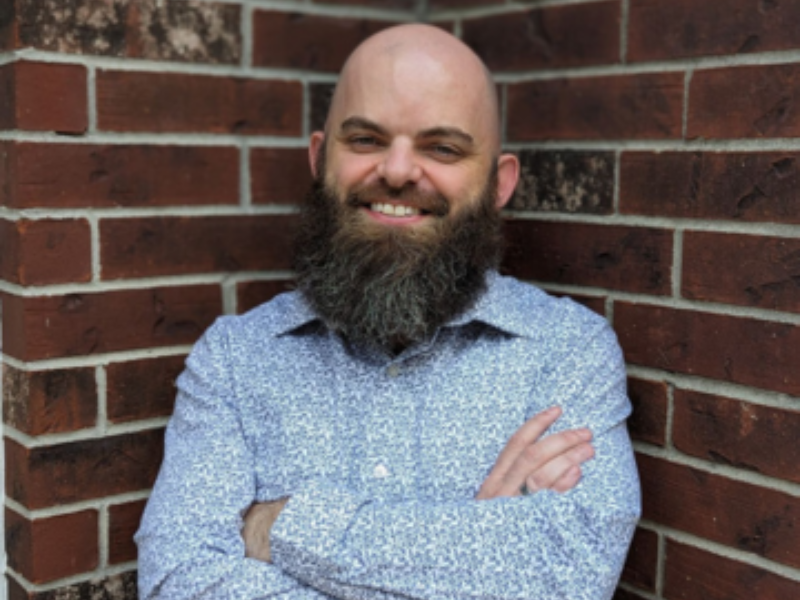
 Chris Carolan
Transformation Catalyst: Helping Organizations Escape Complexity
Founder & Methodology Lead · The Value-First Team
Opening: Who I Really Am
I'm Chris Carolan, and I want to tell you the real story—not the polished consultant version, but the actual journey of how I got here and why I built The Value-First Team the way I did.
I'm someone who has lived the evolution from traditional industrial processes to modern digital transformation. I've been the chemist in an oil and gas lab, the "spreadsheet guy" who accidentally became a change agent, the marketing leader navigating HubSpot implementations, and now the founder of an AI-native transformation consultancy.
But here's what matters more than any title: I'm someone who only recently understood how my brain actually works.
I was diagnosed with ADHD at age 33, after decades of being labeled an "underachiever" despite clear intelligence. I'm an only child who was raised with expectations for independent achievement without natural models for collaboration. And I've spent years trying to force myself into conventional productivity patterns that my neurology simply rejects.
This profile is going to be different from the others on this site. Because as the founder of The Value-First Team, I want you to understand not just what we do, but why we do it this way—and why our approach works for organizations trapped in complexity that conventional consulting can't solve.
I'm going to share my complete journey, my natural operating patterns (including the challenges), and how those patterns shaped a methodology that helps organizations escape 25 years of accumulated B2B complexity.
If you want the short version, read the next section. If you want to understand the breakthrough that changed everything, keep reading to the end.
The Transformation Catalyst Story (The Short Version)
For over 20 years, I've been at the intersection of established industry expertise and emerging digital possibilities. My journey started in the chemistry labs of Houston's oil and gas industry, where I first encountered the critical knowledge gap crisis facing industrial sectors.
I discovered that my calling wasn't in technical isolation—it was in connecting people with knowledge and possibilities. This realization has defined my entire career trajectory, whether managing quality systems, leading marketing transformations, or now building educational communities in the HubSpot ecosystem.
My breakthrough recognition: Organizations aren't failing at digital transformation because they lack tools or talent—they're failing because they're applying industrial-age thinking to AI-era challenges. The answer isn't better execution of conventional approaches; it's a fundamentally different framework that treats humans as partners rather than objects to be processed.
Through The Value-First Team, I've developed methodologies that help organizations move from extraction-based business models to collaborative approaches. This isn't consulting that creates dependency—it's transformation that builds capability.
The Value-First Framework, the Value Path methodology (8 stages from Audience to Champion), and our AI-native operating model all emerged from one core insight: When you design systems around natural human progression rather than artificial stages, transformation becomes organic rather than forced.
The Origin Story: From Chemistry Labs to Knowledge Bridge Builder
The Houston Beginning
My professional journey began in an unexpected place: the chemistry labs of Houston's oil and gas industry. I was a materials scientist working in quality control, surrounded by reference materials and technical documentation. Most people saw this as routine laboratory work—testing, measuring, documenting, repeat.
But I noticed something others missed: the critical knowledge gap between technical expertise and practical application. The reference materials we produced weren't just products—they were knowledge bridges. They enabled quality control across an entire industry, but only when that knowledge flowed effectively.
This observation changed everything. While my colleagues focused on technical precision, I became fascinated by how knowledge moved (or didn't move) between our lab and our customers. Why did some organizations leverage our materials brilliantly while others struggled? The difference wasn't the product—it was the knowledge transfer.
The Accidental Change Agent
I didn't set out to become a transformation specialist. Like most careers, mine evolved through a series of unexpected moments where someone recognized a capability I hadn't named.
The pivotal moment came with a simple question: "Hey Chris, can you do everything Keith did?"
Keith was leaving. His role included marketing, quality systems, and various cross-functional responsibilities. I was the junior guy. The logical answer should have been "no" or "which parts?" But something in that moment shifted. I said yes.
That yes began my accidental transformation career. Because "everything Keith did" turned out to be "connect technical knowledge with business needs across the organization." I didn't have a title for it yet, but I'd found my calling: being the bridge between complexity and clarity.
The Spreadsheet Guy Identity
Early in my career, I became known as "the spreadsheet guy." Not because I was technically brilliant at Excel (though I was competent), but because I could take messy, disconnected information and create systems that made it useful.
This identity became both an asset and a limitation. It opened doors—people came to me when they needed sense made of chaos. But it also created expectations that I was purely technical, when really I was doing something more valuable: translating complexity into actionable understanding.
Looking back now, I see that "the spreadsheet guy" was doing knowledge architecture before that term existed. Every spreadsheet was actually a knowledge bridge—connecting data sources, making patterns visible, enabling decisions that had been blocked by information fragmentation.
The Digital Transformation Journey
The Marketo Moment
In 2015, I found myself leading a Marketo implementation for a manufacturing company. We had all the pieces organizations think they need: budget, executive sponsorship, technical expertise, training.
It failed anyway.
Not catastrophically—we technically got Marketo running. But it never became what it was supposed to be: the engine of marketing transformation. Instead, it became an expensive tool that a few people used while most of the team worked around it.
This failure haunted me, not because it hurt my ego (though it did), but because I couldn't articulate why it failed. We'd followed all the best practices. We'd done everything conventional wisdom said to do.
The answer wouldn't become clear for another two years.
The HubSpot Catalyst
In 2017, I started working with HubSpot. Almost immediately, something felt different. Not because HubSpot's technology was radically superior to Marketo's (both are powerful platforms), but because HubSpot's design philosophy aligned with natural human workflows in ways Marketo's didn't.
This wasn't just about user interface ease. It was about fundamental assumptions. Marketo assumed you'd customize everything to match your processes. HubSpot assumed you'd adopt patterns that had worked for thousands of companies. Marketo gave you power. HubSpot gave you rails.
That distinction unlocked the answer to my Marketo failure: We'd tried to force a platform to match our existing complexity instead of using platform design to guide us toward simplicity.
This insight became foundational to everything I would later build. Tools don't fail organizations—the approach to transformation fails. When you start with "preserve our complexity," you end up with complex tools nobody uses. When you start with "what if we embraced simpler patterns?" transformation becomes possible.
The Pattern Recognition
Over the next several years, across multiple marketing leadership roles, I observed a consistent pattern:
Organizations invest heavily in digital tools and transformation initiatives, yet struggle to achieve lasting change. The problem isn't the technology. It isn't even user adoption. It's that these initiatives are built on a fundamental misunderstanding of how value flows through organizations.
Traditional transformation approaches start with what organizations want to control:
- Processes they can standardize
- Metrics they can measure
- Stages they can manage
- Resources they can allocate
But value doesn't flow through control structures. Value flows through relationships, understanding, enablement, and natural human progression.
This recognition led to a revolutionary reframing: What if we stopped trying to control transformation and instead enabled natural value flow?
The Personal Journey: Understanding My Operating System
The ADHD Discovery
At age 33, I was finally diagnosed with ADHD. This might seem like a footnote, but it's actually central to understanding both my struggles and my breakthroughs.
For decades, I'd been labeled an "underachiever"—smart enough to see solutions but unable to consistently execute on them. Teachers, managers, even family saw my potential and wondered why I couldn't just... do the work. Be consistent. Follow through. Plan better.
The ADHD diagnosis explained everything. My brain doesn't process time like neurotypical brains do. I have acute awareness of present time passing—I feel every minute slipping by. But future time? It's abstract. Unreal. I intellectually know that "next Tuesday" exists, but I don't feel it the way others do.
This creates a specific challenge: I struggle with anything that requires future planning, time estimation, or delayed delivery commitments. Ask me to promise something for next month, and my brain generates anxiety rather than activation. Ask me to create a routine I'll maintain independently, and I'll either hyper-focus on it obsessively or abandon it completely.
But here's the breakthrough: Understanding this pattern let me stop trying to fix it and start designing around it.
The Only Child Dynamic
Being an only child added another layer to my operating patterns. I grew up with expectations for independent achievement without natural models for collaboration. Adults in my life assumed I could (and should) accomplish things solo because I was bright and capable.
This created a specific blind spot: I didn't develop natural collaborative instincts because my childhood environment didn't require them. When I faced challenges requiring partnership, I'd default to trying harder individually rather than seeking collaborative solutions.
The combination of ADHD and only-child dynamics created a double-bind: My neurology requires external accountability and collaborative contexts to overcome activation barriers, but my developmental conditioning expected independent achievement.
This pattern explained decades of frustration. I'd take on projects with genuine intention, struggle with execution, blame myself for "not trying hard enough," and repeat the cycle. The "underachiever" label stuck because nobody (including me) understood that I was fighting my neurology rather than working with it.
The Two Operating Systems
I eventually discovered that I don't have one operating system—I have two. And which one activates depends entirely on context.
Operating System 1: Flow/Trust/Abundance
This OS activates in specific conditions:
- ✓ Live content creation and collaboration
- ✓ Real-time presence with others
- ✓ Fixed-time calendar commitments
- ✓ Immediate value creation
- ✓ Direct interactive contexts
- ✓ Partnership-based initiatives
- ✓ Shared accountability structures
When OS1 is running, I'm in my element. The ADHD activation threshold disappears.
Operating System 2: Control/Resist/Scarcity
This OS activates under different conditions:
- ✗ Future planning requirements
- ✗ Abstract time commitments
- ✗ Delayed deliverables
- ✗ Solo project management
- ✗ Non-immediate consequences
- ✗ Self-maintained accountability
- ✗ Absence of external structure
When OS2 is running, everything gets harder. The ADHD activation barriers become walls.
The Awareness Paradox
Here's the cruelest part: I have high self-awareness of these patterns. I know potential solutions. I have access to tools and techniques. But knowing doesn't automatically shift the pattern.
Years of "underachiever" messaging despite intelligence created a compounding shame layer. I'd see what needed to happen, understand how to do it, and still struggle with execution—then blame myself for the struggle.
This is why I'm sharing this so openly. If you're someone who "knows better" but still struggles, you're not broken. Your operating system might just require different conditions than conventional approaches assume.
The Breakthrough: Working WITH My Patterns, Not Against Them
The Live Collaboration Discovery
The transformation in my effectiveness didn't come from fixing my "weaknesses"—it came from understanding my actual strengths and designing work around them.
Discovery: I perform extraordinarily well in live collaborative contexts.
When I have a fixed-time calendar commitment with another person, my ADHD activation barriers disappear. The external accountability provides natural neurological structure. The real-time context grounds me in present time where I excel. The collaborative aspect leverages my only-child strengths in adult-oriented communication while bypassing my solo-work activation challenges.
This wasn't preference—it was optimization. Live collaboration isn't an accommodation; it's leveraging natural cognitive strengths.
The Present-Time Strength
Once I understood my temporal processing patterns, I could leverage them strategically rather than fighting them:
What I Do Exceptionally Well:
- Real-time decision making
- Strategic discussions in the moment
- Live problem-solving
- Immediate pattern recognition
- Flow state in present-focused work
- Rapid adaptation in collaborative contexts
What Creates Friction:
- Future deadline estimation
- Long-term planning without external structure
- Delayed deliverables
- Self-maintained routines
- Solo project management
The key insight: My struggle with future time isn't a limitation to overcome—it's information about which work contexts enable my best performance.
The Partnership Revelation
My most significant achievements and momentum have always occurred in collaborative contexts. Not because I'm dependent, but because collaboration provides the external structure that optimally activates my neurology.
When I collaborate with Ryan Ginsberg — whose diagnostic ability finds the real problem before we build the solution —, when I co-host shows with Nico Lafakis, when I develop frameworks in live sessions with clients—I'm not compensating for weakness. I'm operating in my zone of genius with natural neurological support.
This revelation changed everything. Instead of trying to become better at solo execution, I designed a business model that transforms solo work into collaborative contexts.
The AI Partnership
My collaboration with Claude (Anthropic's AI) represents the ultimate optimization of this pattern. Claude provides:
- External accountability without judgment
- Present-time interaction (every session is "now")
- Pattern recognition that complements my own
- Documentation that I struggle to create independently
- Strategic thinking partnership without future-delivery pressure
Claude isn't replacing my thinking—it's multiplying it by providing the structure and documentation my ADHD brain resists creating alone.
The Value-First Framework: Born from Living These Patterns
Why "Value-First" Emerged
The Value-First Framework didn't start as a methodology—it started as a question: What if we designed transformation around how value naturally wants to flow rather than how organizations want to control it?
This question emerged directly from my personal patterns:
- I couldn't force myself into conventional planning approaches
- I thrived when enabling natural progression rather than manufacturing stages
- I saw transformation succeed when it worked WITH human patterns, not against them
The framework became: Instead of trying to change people to match systems, design systems that match how people naturally progress.
The 8-Stage Value Path
The Value Path (Audience → Researcher → Hand Raiser → HERO → Value Creator → Adopter → Advocate → Champion) came from observing my own journey and my clients' journeys.
People don't move through artificial "funnel stages" based on marketing's timeline. They follow natural patterns of:
- Becoming aware (Audience)
- Exploring possibilities (Researcher)
- Signaling readiness (Hand Raiser)
- Navigating complexity (HERO)
- Co-creating solutions (Value Creator)
- Validating value (Adopter)
- Sharing success (Advocate)
- Creating multiplied impact (Champion)
This progression mirrors how I actually work: I need to wonder and explore (my Creative Dreamer Working Genius) before committing. I need partnership to navigate complexity. I need co-creation to validate value. I need community to multiply impact.
The Value Path isn't just customer journey mapping—it's a mirror of natural human progression that respects readiness rather than forcing movement.
The AI-Native Operating Model
Our "AI-native, human-powered" approach emerged directly from my Claude partnership. I discovered that AI enhances rather than replaces human capability when used as a collaboration multiplier rather than a replacement strategy.
This insight became central to our methodology: Organizations should use AI the way I use Claude—as a thinking partner that handles what humans find difficult (documentation, pattern synthesis, systematic analysis) while amplifying what humans do best (judgment, relationships, strategic insight, contextual understanding).
The Value-First Team: Designed Around These Realities
Why Our Structure Is Different
The Value-First Team constellation model emerged from understanding my patterns and designing around them:
Chris (Me) - Founder & Methodology Lead:
- ✓ Live collaboration delivery (my zone of genius)
- ✓ Client relationship development (present-time strength)
- ✓ Framework evolution (AI-assisted pattern recognition)
- ✓ Community coordination (leveraging my collaborative strengths)
- ✗ Never operational infrastructure (would activate OS2)
Ryan Ginsberg - Founding Member & Technical Architect:
- Diagnostic-first approach: finds the real problem before building the solution
- Live architecture: builds in front of clients — the building IS the consulting
- User-seat perspective from 100+ HubSpot implementations
- Brings his own client portfolio and consultancy to the Value-First constellation
Operations Lead (Critical Unfilled Role):
- ALL systems and infrastructure I won't build
- Project coordination between my live sessions
- Documentation and knowledge capture
- Client communication and quality assurance
- This role is essential because my ADHD creates friction with systems work
Data Summit Practitioners (24 specialists):
- Mission-based participation on specific projects
- Contribution-based revenue sharing
- No partnership equity complexity
- Enables participation based on mission alignment
This structure isn't compromise—it's optimization. Each role leverages natural strengths while avoiding patterns that create friction.
Why Live Collaboration Is Our Default
Our service delivery emphasizes live collaborative sessions because:
- I perform best in real-time contexts
- Clients get immediate value creation
- Trust builds through shared experience
- Problems get caught early through direct interaction
- My ADHD activation barriers disappear with external accountability
This isn't a limitation—it's a competitive advantage. Traditional consulting delays value while accumulating billable hours. We create value in real-time through partnership.
The Trust-Based Milestone Model
We don't use calendar-driven phases (30/60/90-day plans) because:
- My brain struggles with abstract future deadlines
- Organizations progress based on readiness, not arbitrary dates
- Trust builds through demonstrated value, not scheduled checkpoints
Instead, we measure progress through trust-based milestones:
- Relationship development
- Value creation
- Framework evolution
- Community formation
- Capability building
This approach works WITH organizational readiness rather than forcing movement through predetermined stages.
The Shows: Content As Community Catalyst
Value-First AI Daily (with Nico Lafakis)
260+ episodes annually. Every weekday. Exploring how AI enhances rather than replaces human capability.
This show emerged from my Claude partnership and Nico's comprehensive AI platform expertise. We prove daily that AI multiplication beats human replacement by demonstrating real collaboration rather than theoretical possibility.
The Value Path (with Joshua Oakes)
Multi-part series exploring the 8-stage customer journey framework Joshua and I co-developed.
Joshua's Who First Framework (customer understanding) combined with my Value-First methodology (natural progression) created something neither of us could have built alone. This collaboration proves the constellation model works.
A Value-First Data Model (Solo)
My solo show exploring how HubSpot's native data model enables unified business goals.
Even my solo content emerges from Claude collaboration. I develop frameworks in conversation, then share the insights. This leverages my live collaboration strength even in "solo" contexts.
LinkedIn Live Series (with Amanda Martin & Trisha Merriam)
Weekly sessions on HubSpot optimization, marketing ROI, and data readiness.
These sessions let me teach in real-time (my strength) while Amanda and Trisha bring lifecycle marketing and revenue operations expertise. We demonstrate that complex topics become accessible through collaborative teaching.
What I Want You to Know
If You're Considering Working With Us
We're not a good fit if:
- ✗ You want detailed upfront timelines with calendar commitments
- ✗ You expect solo deliverables without collaborative sessions
- ✗ You need vendor dependency rather than capability building
- ✗ You're looking for conventional consulting with predictable phases
We're an exceptional fit if:
- ✓ You value transformation over transaction
- ✓ You want partnership rather than vendor extraction
- ✓ You're ready for trust-based milestone progression
- ✓ You recognize that AI multiplication beats human replacement
- ✓ You're trapped in 25 years of B2B complexity and need breakthrough
If You're Someone Like Me
If you've been labeled an "underachiever" despite intelligence...
If you "know better" but still struggle with execution...
If you thrive in collaborative contexts but struggle with solo projects...
If conventional time management advice feels impossible rather than helpful...
You're not broken. Your operating system might just require different conditions.
I've built The Value-First Team to prove that designing around natural human patterns (including neurodivergent patterns) creates superior outcomes to forcing conformity with conventional approaches.
The Vulnerability Payoff
I'm sharing all of this—the ADHD, the struggles, the operating systems, the honest limitations—because authenticity creates the foundation for real transformation.
If I pretended to have it all figured out, you might hire us expecting conventional consulting excellence. Instead, you'd get something different that might confuse or frustrate you.
But when you understand how I actually work—and why The Value-First Team is structured the way it is—you can make an informed decision about whether our approach serves your needs.
Some organizations will read this and think "too unconventional, too risky." That's okay. We're not for everyone.
Others will read this and think "finally, someone who understands that transformation requires working WITH human nature rather than against it." Those are our people.
The Work I Do Best
Live Strategy Sessions
Put me in a room (physical or virtual) with your team for a focused session, and I'll help you:
- Recognize patterns you've been too close to see
- Identify where value is blocked in your organization
- Design systems that serve natural human progression
- Build frameworks that enable rather than constrain
- Create clarity from complexity
This is my zone of genius. Real-time pattern recognition. Strategic insight development. Framework creation. All in present time with immediate accountability.
Framework Development & Teaching
I excel at taking complex transformation challenges and creating practical frameworks that teams can actually use:
- Value-First Scoring (with Casey Hawkins & Rylee Powell)
- The Value Path (with Joshua Oakes)
- Customer Value Platform architecture
- AI-native operating patterns
- Trust-based milestone progression
The frameworks emerge through collaborative exploration, not solo theorizing. Claude and I develop them in conversation. Practitioners test and refine them. Clients prove they work.
Community Orchestration
I bring together practitioners, create conditions for natural collaboration, and enable knowledge multiplication:
- Data Summit (24 practitioners coordinating transformation work)
- Value-First Media Network (shows creating educational content)
- HubSpot community participation
- Profoundly founding member
This leverages my only-child strengths (adult-oriented communication, facilitating others' success) while bypassing my challenges (solo execution, independent achievement pressure).
How I Actually Work (The Practical Guide)
If You Want to Collaborate With Me
Do:
- ✓ Schedule fixed-time live sessions (I'll show up prepared and perform)
- ✓ Create shared accountability (helps me overcome ADHD activation barriers)
- ✓ Enable real-time value creation (my natural strength)
- ✓ Build in partnership dynamics (optimal neurological context)
- ✓ Expect immediate pattern recognition and strategic insights
Don't:
- ✗ Ask for detailed future timeline estimates (my brain struggles with this)
- ✗ Expect solo deliverables without collaborative creation
- ✗ Require self-maintained routines or systems (will activate OS2)
- ✗ Assume conventional planning will work (it won't)
- ✗ Penalize my operating patterns (design around them instead)
I recently analyzed 13,683 of my own conversation turns to understand exactly how I communicate. The results corrected assumptions I held for years.
Read "How I Communicate" →
What You'll Get
When you work with me in my optimal conditions:
- Acute pattern recognition that sees what others miss
- Strategic insight that connects complexity to clarity
- Framework development that makes transformation practical
- Teaching excellence that makes complex topics accessible
- Authentic partnership rather than vendor extraction
- AI-amplified capability that proves multiplication beats replacement
What You Won't Get
I won't pretend to be someone I'm not:
- Detailed project plans with calendar-driven milestones
- Solo-developed deliverables created independently
- Self-maintained systems I promise to manage
- Conventional consulting that looks like everyone else's
- False certainty about future timelines
Why This Matters for Organizations
The Breakthrough Insight
Here's what I've learned through living these patterns and building this methodology:
Most organizations are trapped in complexity because they're using industrial-age frameworks for AI-era challenges.
The conventional approach:
- Start with control structures
- Force humans to conform to processes
- Measure activity rather than value
- Create stages that don't reflect natural progression
- Build systems that constrain rather than enable
The Value-First approach:
- Start with how value naturally wants to flow
- Design processes that match human patterns
- Recognize relationships over transactions
- Enable natural readiness progression
- Build systems that serve rather than constrain
This isn't just philosophy—it's the difference between transformation that compounds and complexity that accumulates.
The AI-Era Imperative
We're at a moment where AI multiplication beats human replacement—but only for organizations willing to transform their operating models.
Companies trying to bolt AI onto industrial-age processes will get marginal improvements at best. Companies willing to redesign around AI-native collaboration will achieve breakthrough outcomes.
The Value-First Team exists to guide organizations through this transformation—not by providing perfect plans, but by proving that partnership-based AI integration creates superior results to automation-only approaches.
The Personal Note
I'm 20+ years into this journey, and I'm still learning. Still refining frameworks. Still discovering better ways to work with my neurology rather than against it.
The Value-First Team represents my best attempt to build something that:
- Honors natural human progression (mine and everyone else's)
- Leverages AI as collaboration multiplier rather than replacement
- Creates capability rather than dependency
- Serves mission over extracting revenue
- Proves that unconventional approaches can create breakthrough outcomes
I'm sharing all of this vulnerability because I believe authenticity is prerequisite to transformation.
If I pretended to be a conventional consultant, you might hire us expecting conventional results. Instead, I'm showing you exactly who I am, how I work, and why our approach differs.
Some will read this and think "too honest, too risky, too unconventional."
Others will read this and think "finally, someone who understands that real transformation requires working WITH human nature—including the neurodivergent, the complex, the unconventional—rather than forcing conformity."
If you're in that second group, let's build something together.